Everything you might want to know before signing up.
What is CvNeat?
CvNeat is a CV builder made specifically for the European job market. Instead of one generic template, we offer country-specific formats that match how local recruiters actually read CVs. You pick your target country and the editor adapts: sections, date formats, photo conventions, and writing hints all change to match local norms.
Is CvNeat free to try?
Yes. You get 7 days of full access with no credit card required. After the trial, CvNeat is a flat monthly subscription with no tiers, no upsells, and no auto-renewal tricks. You can cancel in one click from your account settings.
Which countries does CvNeat support?
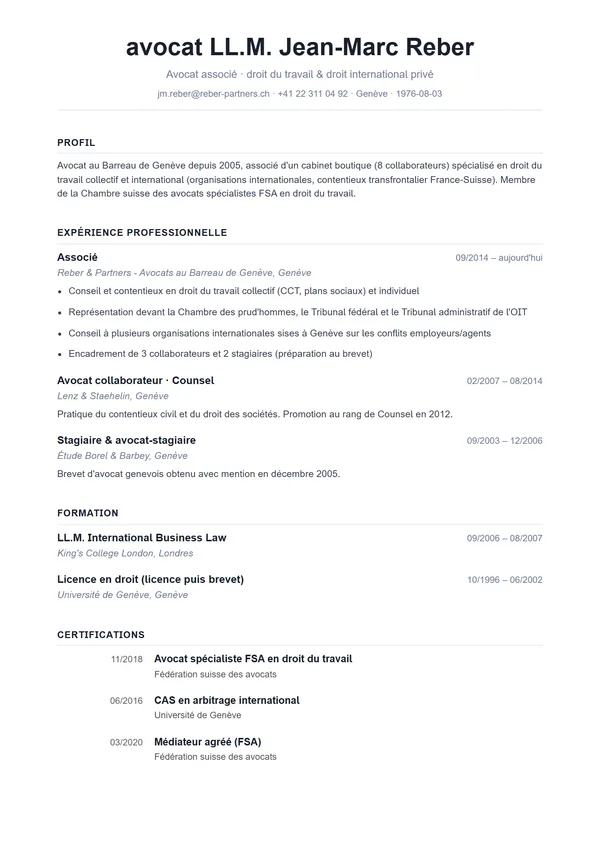
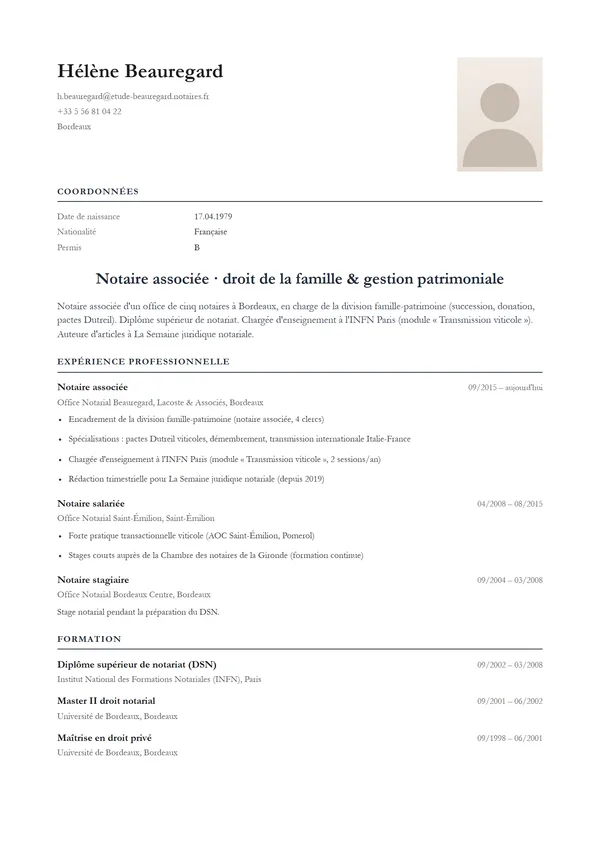
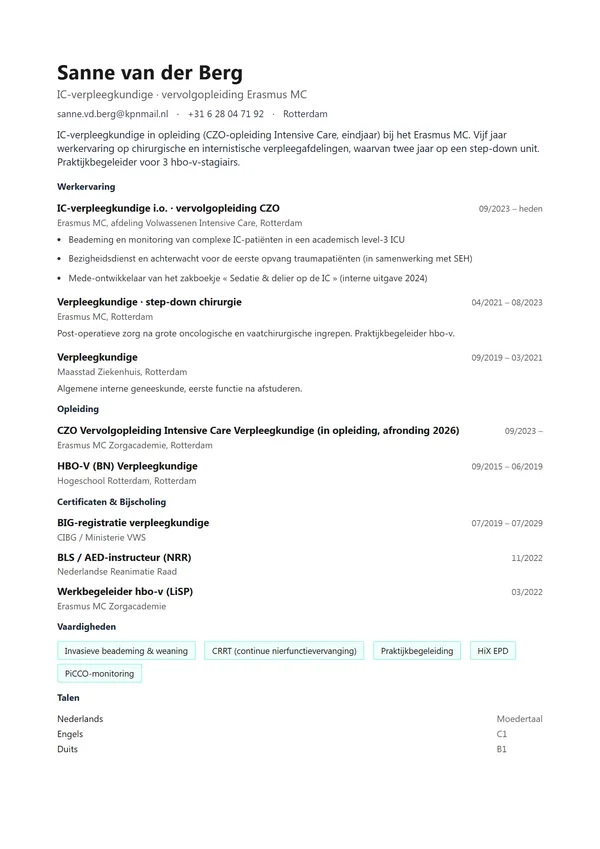
CvNeat currently supports five countries with full templates and recruiter conventions: Germany, Austria, Switzerland, France, and the Netherlands. Each country gets its own template structure, date format, and recruiter expectations baked in. More countries are coming soon.
Do I need a photo on my CV in Germany?
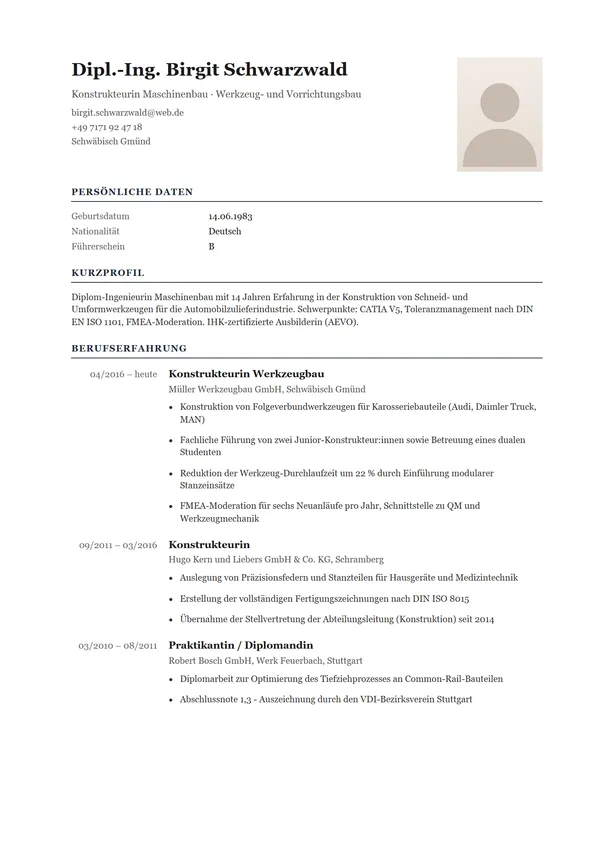
It is no longer legally required, but most German recruiters still expect a Bewerbungsfoto, especially for traditional industries. CvNeat lets you toggle the photo on or off per CV. The German templates include a properly positioned, DIN-portrait photo slot when enabled, and a clean photo-free layout when not.
Is CvNeat GDPR-compliant?
Yes. CvNeat is built in the EU for the EU. Your data is hosted on EU infrastructure, you can export everything as JSON, and you can delete your account along with all CVs and personal data in a single click. We do not sell your data, and we do not include third-party trackers that aren't strictly necessary.
Are CvNeat CVs ATS-friendly?
Yes. Every template is designed to parse cleanly in Applicant Tracking Systems used by European employers. We avoid skill bars, multi-column layouts that confuse parsers, embedded images-as-text, and decorative fonts. The PDF export uses standard structure so your name, headings, and dates land in the right fields.
Can I write my CV in German, French, Dutch, or English?
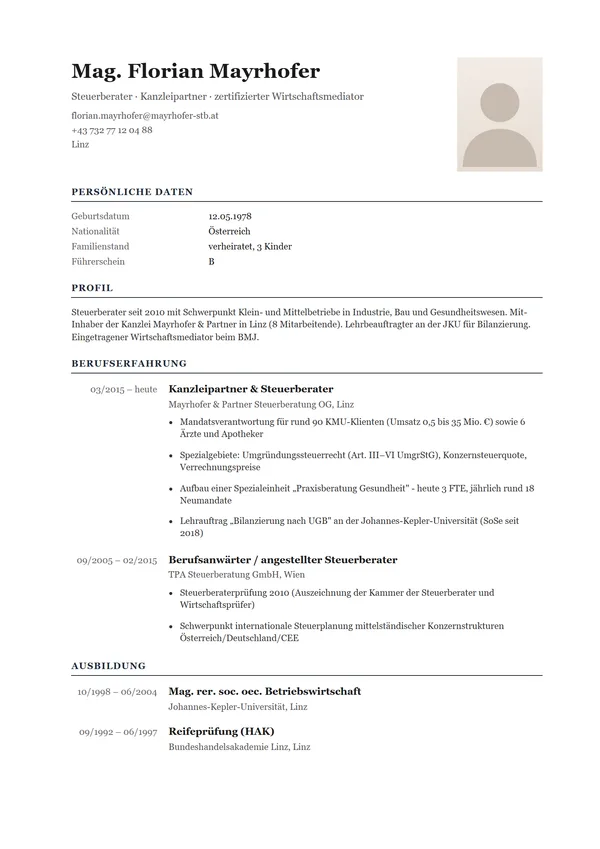
Yes. CvNeat supports CV authoring in English, German, French, Dutch, Italian, and Spanish. Section labels, date formats, and writing hints adapt to local hiring conventions in each market (Lebenslauf for Germany, Profielschets for the Netherlands, Titre du CV for France, and so on).
How is CvNeat different from FlowCV, Zety, or Resume.io?
Most CV builders are designed around the US-style one-page resume and then translated into other languages. CvNeat is opinionated about Europe: the Lebenslauf is tabular by default, the French CV opens with a Titre du CV, the Dutch CV is direct and factual, and Swiss CVs ask for nationality and permit type. We also commit to honest pricing, no hidden auto-renewals, and one-click GDPR data deletion.
What is the best CV builder for Germany in 2026?
The best German CV builder produces a proper Tabellarischer Lebenslauf: tabular, reverse-chronological, ATS-friendly, with an optional Bewerbungsfoto. CvNeat does exactly this. Pick Germany and the editor applies local sections, MM.YYYY dates and photo conventions automatically. It is free during beta, GDPR-compliant and EU-hosted.
Lebenslauf vs resume: what is the difference?
A Lebenslauf is the German tabular CV: reverse-chronological, often two pages, frequently with a photo, signature and full personal data. A US resume is a shorter, one-page summary without a photo. CvNeat builds a correct Lebenslauf for German-speaking markets and a clean layout for international roles.
Do I need a photo on a Swiss CV?
A photo is customary on Swiss CVs and still expected by most recruiters, though it is not legally required. Include a professional headshot unless the employer says otherwise. CvNeat lets you toggle the photo on or off per CV, so you can match each Swiss application.
Is Europass still used in 2026?
Yes. Europass is still used across the EU, especially for academic, public-sector and cross-border applications, though many private employers find its fixed layout generic. CvNeat offers Europass-compatible structure plus country-specific templates that local recruiters in Germany, France and beyond prefer.